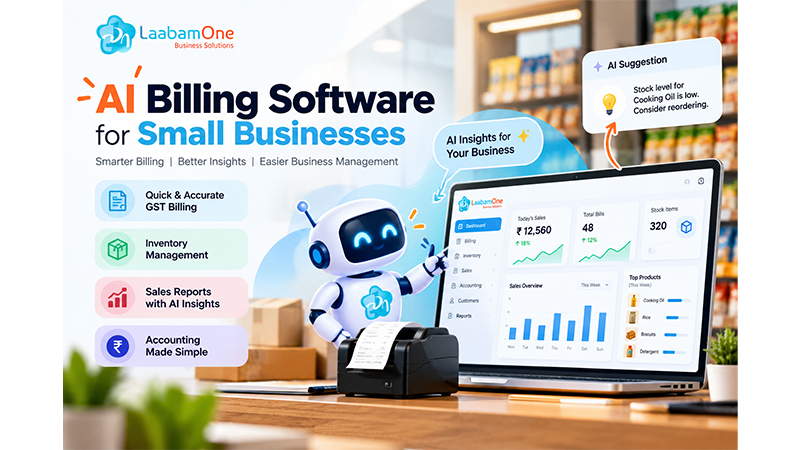
Learn how AI billing software helps small businesses simplify billing, understand sales performance, manage inventory, and organise daily business operations with smarter tools.
Running a small business means handling many things at the same time. You have to prepare customer bills, check payments, manage stock, keep track of expenses, and understand how much your business is earning.
When the business is small, managing these tasks manually may feel manageable. But as the number of customers and transactions increases, it becomes harder to keep everything organised.
This is one reason why many businesses are starting to explore AI billing software. Instead of using software only to generate invoices, business owners are looking for smarter ways to understand their sales, manage information, and save time on everyday work.
But what does AI actually do in billing software? And is it useful for a regular retail shop or small business?
Let's take a closer look.
What Is AI Billing Software?
Traditional billing software helps businesses create invoices, calculate totals, record sales, and maintain transaction details.
AI billing software takes this a step further by using artificial intelligence to work with business information and provide additional assistance.
For example, a normal billing system may show how much a shop sold last month. An AI-enabled system may help the owner understand changes in sales patterns or highlight information that needs attention.
The idea is simple: instead of just storing business information, software can also help make that information easier to understand.
However, the actual AI features available depend on the software.
Why Are Businesses Interested in AI Billing Software?
Imagine a shop owner who finishes a busy day of sales. At the end of the day, they still need to check sales, review expenses, look at stock levels, and plan purchases for the next day.
Doing all this manually takes time.
AI-powered tools can help analyse available business information and make certain tasks easier. This can be useful for owners who want to spend less time going through records and more time looking after their business.
AI is not about replacing the shop owner's experience. It is about giving them better information to work with.
1. Spend Less Time on Everyday Billing
Billing is something retailers deal with throughout the day. When customers are waiting, even small delays can affect the shopping experience.
Billing software helps organise the process by allowing employees to select products, enter quantities, calculate totals, and generate invoices.
For example, a grocery store handling many customer transactions every day can benefit from a simple and organised billing process.
AI may provide additional assistance in certain billing workflows, depending on the software. But the basic requirement remains the same: bills should be accurate, clear, and easy to generate.
2. Understand Your Sales Beyond the Total Amount
Knowing your daily sales amount is useful, but it does not always explain how your business is performing.
Think about a retailer who sells several different products. Some products may sell regularly, while others may have very little demand.
By reviewing sales information, business owners can understand which products contribute more to their sales and how customer demand changes over time.
AI-powered analysis may help identify patterns in this information and bring important observations to the owner's attention.
These insights can support better decisions when planning purchases or reviewing business performance.
3. Make Inventory Management Easier
Stock management is another area where business owners spend a lot of time.
Ordering too much stock can block money, while ordering too little can result in products becoming unavailable when customers need them.
For example, a supermarket owner may notice that certain grocery products sell every day, while some household items remain in stock for weeks.
By reviewing sales history and available stock, retailers can understand which products need attention.
AI-enabled inventory features, where available, may help analyse product demand and support stock planning. However, business owners should still consider supplier delivery times, seasonal demand, and actual stock quantities before placing orders.
4. Get a Clearer Picture of Business Performance
Business owners often have questions that cannot be answered by looking at a single bill.
How are sales compared with last month? Which products are performing well? Are expenses increasing? What needs more attention?
Business reports and dashboards help bring this information together.
AI-powered tools may make it easier to explore business data and identify patterns. This can be particularly useful for owners who do not have the time to analyse every report manually.
The final decisions still depend on the owner's understanding of the business.
5. Reduce Repetitive Work
Small business owners usually handle several responsibilities themselves. Preparing records, checking transactions, and reviewing reports can take time away from other important activities.
A good billing and business management system can reduce some of this repetitive work by keeping information organised.
When relevant AI features are available, they can provide additional assistance with analysing data and handling supported tasks.
The aim is not to automate everything. It is to make everyday work a little easier and reduce unnecessary manual effort.
6. Is AI Billing Software Suitable for Small Businesses?
AI billing software is not only something large companies need to consider.
Retail shops, supermarkets, grocery stores, and small businesses may also benefit from suitable billing and business management tools.
For a small retailer, the most important features might be simple billing and stock records. A growing business may also need accounting, sales reports, and additional business insights.
There is no need to choose software simply because it has many AI features. What matters is whether it solves the problems you face in your daily business operations.
What Should You Check Before Choosing AI Billing Software?
Before selecting a billing system, spend some time understanding what it actually offers.
Check whether it supports your billing and GST requirements. Look at how it manages stock and whether you can access the reports you need.
Most importantly, understand its AI features. Some software may provide intelligent reporting, while others may offer different types of assistance. Do not assume that every product advertised as AI billing software provides the same capabilities.
Also consider pricing, ease of use, customer support, and how your business information is protected.
If a demo or free trial is available, try it before making a decision.
Explore Laabam.One for Your Business
Managing billing, accounting, and inventory through different systems can become difficult as a business grows.
Laabam.One brings business management features such as billing, accounting, inventory, and AI-powered business tools together in one platform.
If you are looking for ways to organise your daily business activities, you can explore Laabam.One and understand the features available for your business.
You can also check the pricing plans before deciding whether the platform suits your requirements.
Final Thoughts
Running a business is already a demanding job. Spending too much time checking records, preparing bills, and going through business information can make daily work even more difficult.
AI billing software can help by making business information easier to understand and supporting certain routine activities. But the right software is not necessarily the one with the most AI features.
Choose a system that handles your everyday billing requirements, keeps your records organised, and offers useful tools as your business grows.
At the end of the day, technology should make running your business easier, not more complicated.